
Vitamin D Receptors are important for health (technical)
Pleiotropic Activities of Vitamin D Receptors – Adequate Activation for Multiple Health Outcomes
Clin Biochem Rev. 2015 May; 36(2): 53–61.
Jackson W Ryan,1 Paul H Anderson,1 and Howard A Morris 1,2
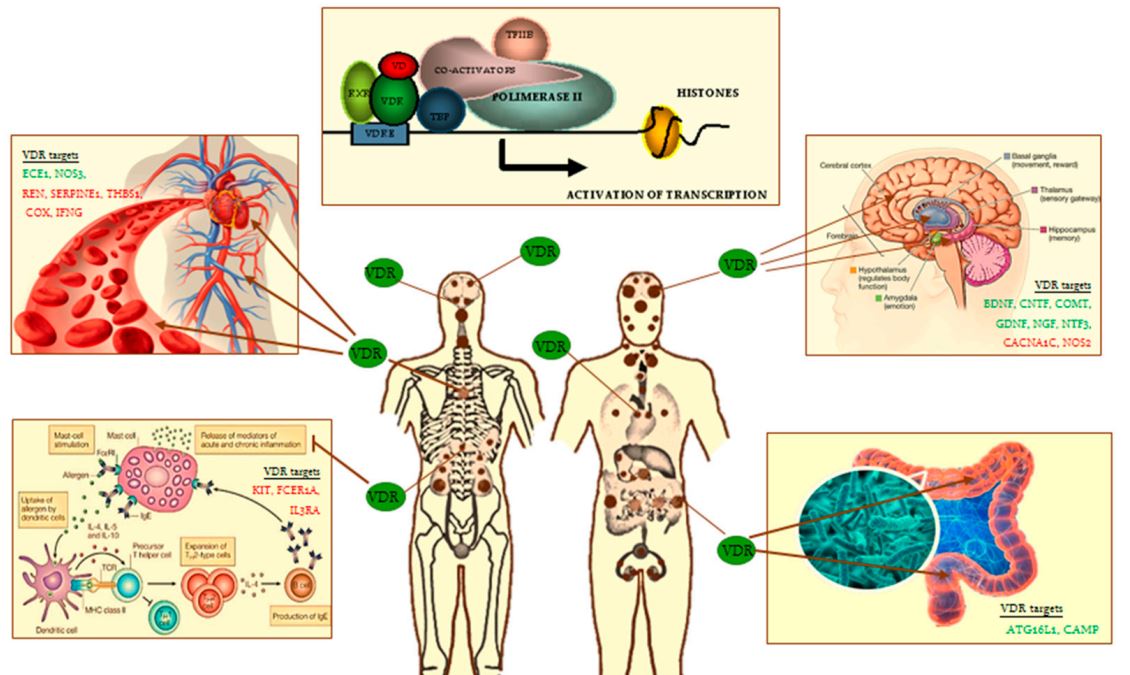
The vitamin D receptor (VDR), a nuclear transcription factor, elicits physiological regulation of gene transcription following binding of its ligand, 1,25-dihydroxyvitamin D. The major biological activities of vitamin D contribute to regulation of plasma calcium and phosphate homeostasis and bone remodeling, although recent evidence suggests that vitamin D, like other steroid hormone receptors, can regulate a diverse range of biological activities across many tissues. Such properties raise the notion that vitamin D deficiency may not only be detrimental to bone and muscular health, but also a risk factor for a number of adverse health outcomes including increased risk of cardiovascular disease, inflammation, immune system disorders and cancer. Advances in transcriptional research provide data not only on ligand-dependent activities of the VDR, but other activities of vitamin D extending to rapid modulation of intra-cellular signaling pathways as well as apparent ligand-independent interactions between the VDR and other transcriptionally active proteins.
In this review, we detail the chief molecular activities of the VDR in
regulating gene transcription,
intracellular signaling and
actions of VDR via binding to transcriptional regulating proteins.
The breadth of biological activities attributed to vitamin D informs clinical biochemists and health care professionals on the implications of vitamin D deficiency for health.
📄 Download the PDF from Vitamin D Life
See also Vitamin D Life
Some people need more vitamin D to get the same response – perhaps due to genes – Nov 2014
Obesity strongly associated with vitamin D receptor in Saudia Arabia – July 2014
Role of Vitamin D in human Diseases and Disorders – An Overview – DBP, VDR June 2014
Melanoma risk 2X to 4X higher if Vitamin D receptor genes had morphed – March 2014
Vitamin D Receptor role in Autoimmune Diseases and or cancers – Nov 2013