
Exercise, exerkines, and Vitamin D
The interplay between vitamin D status and exerkine signaling: implications for exercise adaptation in athletes: narrative review
J Int Soc Sports Nutr. 2026 Dec 31;23(1): doi: 10.1080/15502783.2026.2677647.
Do-Houn Kim (UK)
Table of Contents
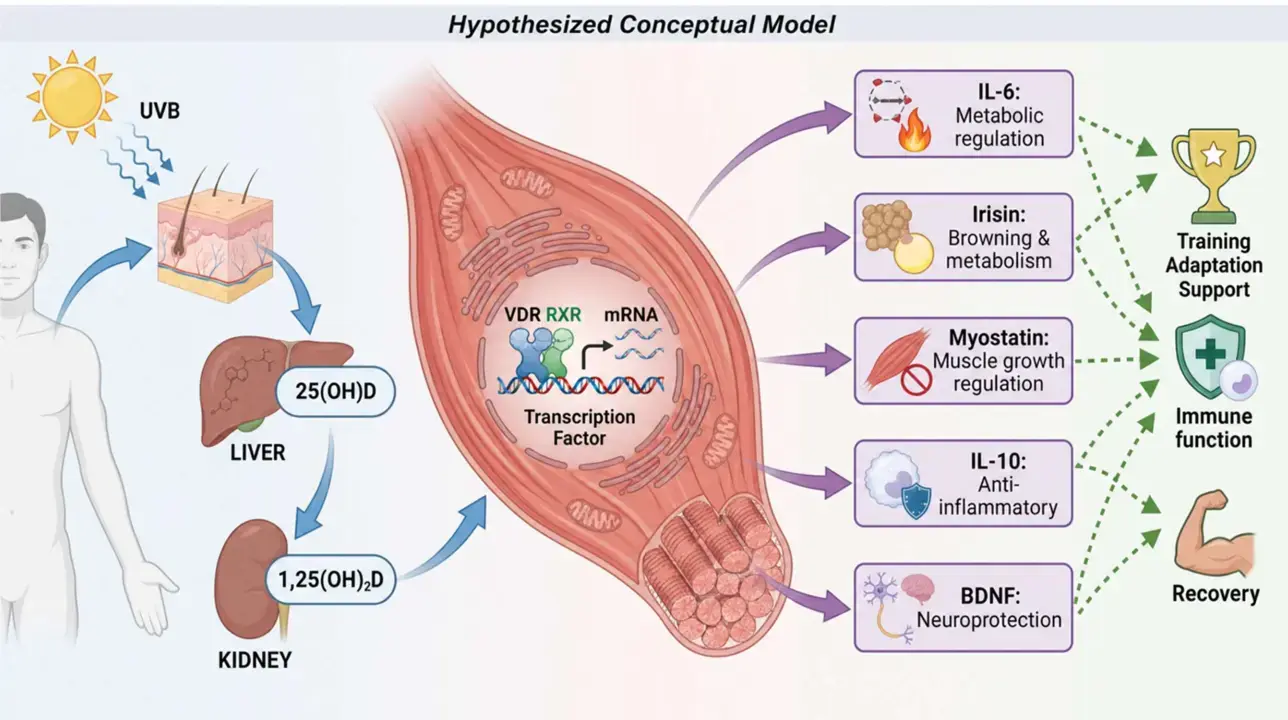
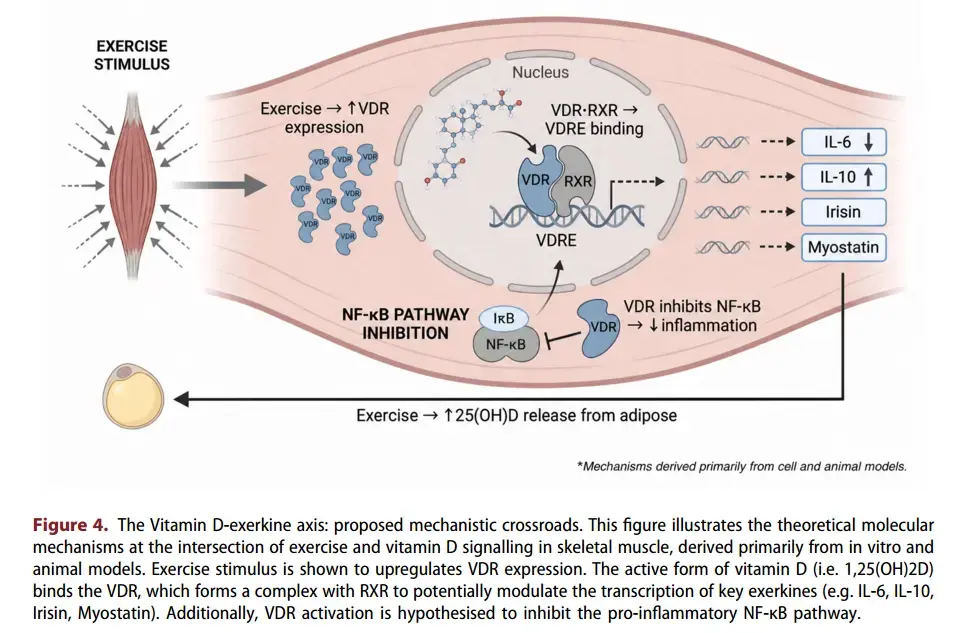
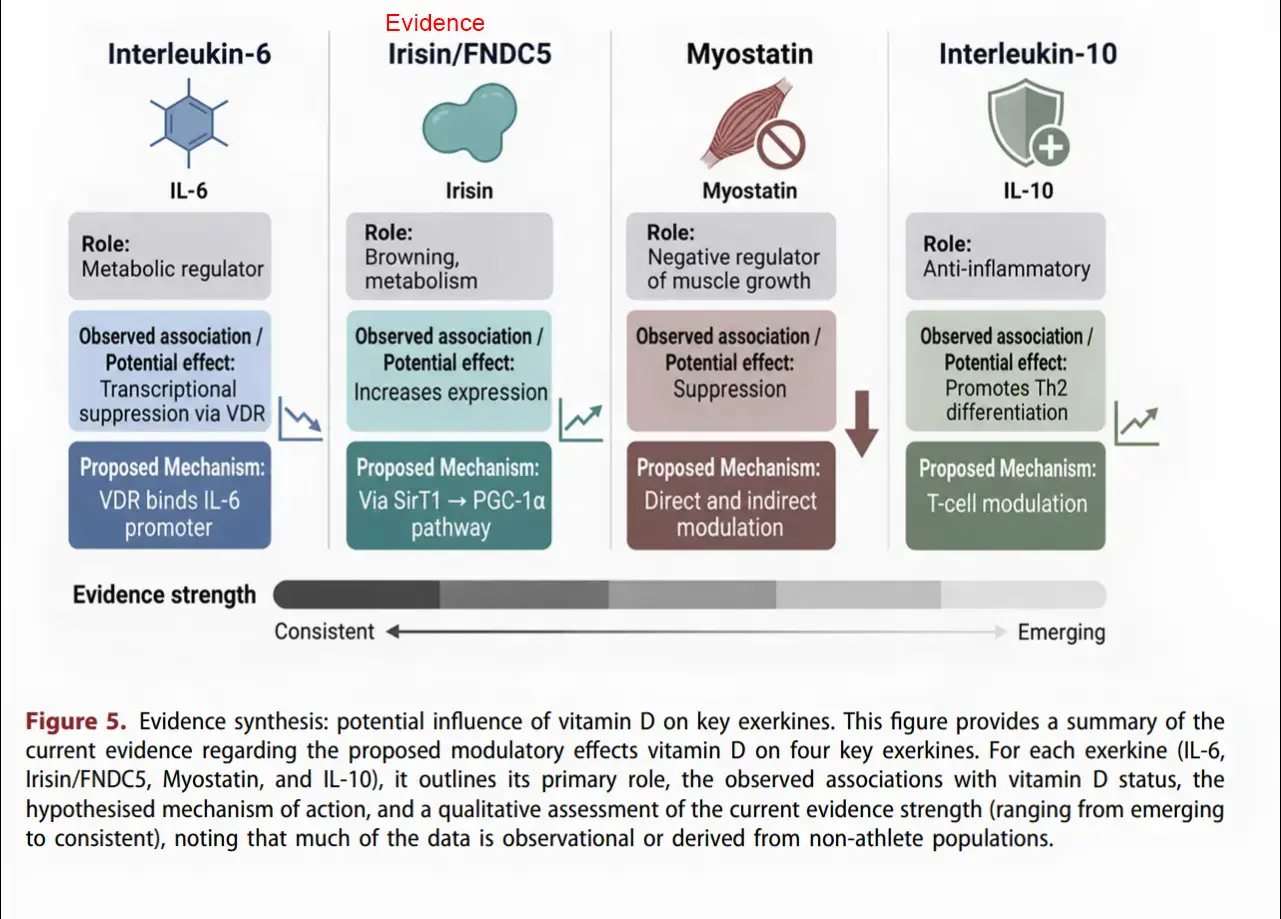
Background: Exercise elicits systemic adaptations through a coordinated network of exercise-responsive signaling molecules termed exerkines. Vitamin D, classically linked to calcium homeostasis, has been increasingly characterized as a pleiotropic hormone with immunomodulatory and myotropic actions that may be relevant to training adaptation and recovery in athletic populations.
Objective: This narrative review synthesizes mechanistic and clinical evidence examining whether vitamin D status and supplementation are associated with modulation of selected exercise-responsive exerkines, and it introduces a unifying conceptual model, the "vitamin D-exerkine axis", to frame potential points of interaction between vitamin D signaling and the exercise-induced secretome.
Methods: A narrative literature review was conducted using searches of PubMed and Google Scholar, incorporating mechanistic, observational, and intervention studies in animal and human models relevant to vitamin D signaling and exercise-responsive exerkines. Evidence was synthesized qualitatively to distinguish biological plausibility from athlete-specific causal inference.
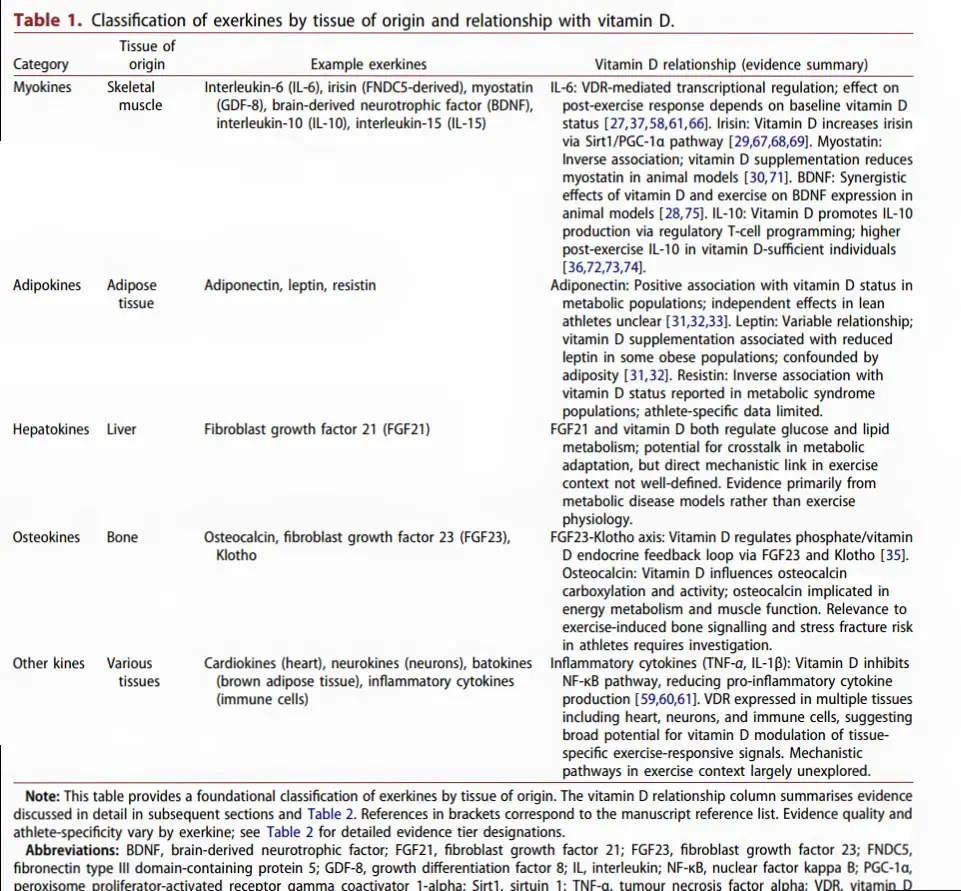
Results: Across experimental systems, vitamin D signaling via the vitamin D receptor (VDR) has been associated with expression of several exerkines implicated in inflammation, metabolism, and muscle remodeling. Evidence most consistently discussed in the literature involves IL-6, irisin/FNDC5, myostatin, and anti-inflammatory cytokines (e.g. IL-10), although effect direction and magnitude appear context-dependent and are influenced by baseline vitamin D status, study design, and outcome timing. A bidirectional relationship is plausible: exercise may upregulate VDR expression in skeletal muscle and has been associated with transient changes in circulating vitamin D metabolites, while vitamin D sufficiency may shape aspects of the post-exercise inflammatory and metabolic milieu. Collectively, these observations support a working model in which vitamin D status could modulate parts of the exercise-response signaling network, but definitive athlete-focused causal evidence remains limited.
Conclusion: The proposed vitamin D-exerkine axis offers a hypothesis-generating conceptual model for integrating nutrition endocrinology with exercise physiology. Current data support biological plausibility for interaction, yet heterogeneity in study populations, endpoints, and supplementation protocols constrains strong causal inference in athletes. Future research should prioritize well-controlled trials that account for baseline 25(OH)D status, define dose-response relationships, test sex- and sport-specific effects, and incorporate tissue-level endpoints to clarify mechanisms and relevance to training adaptation and recovery.
Exerkrine Overview - May 2026
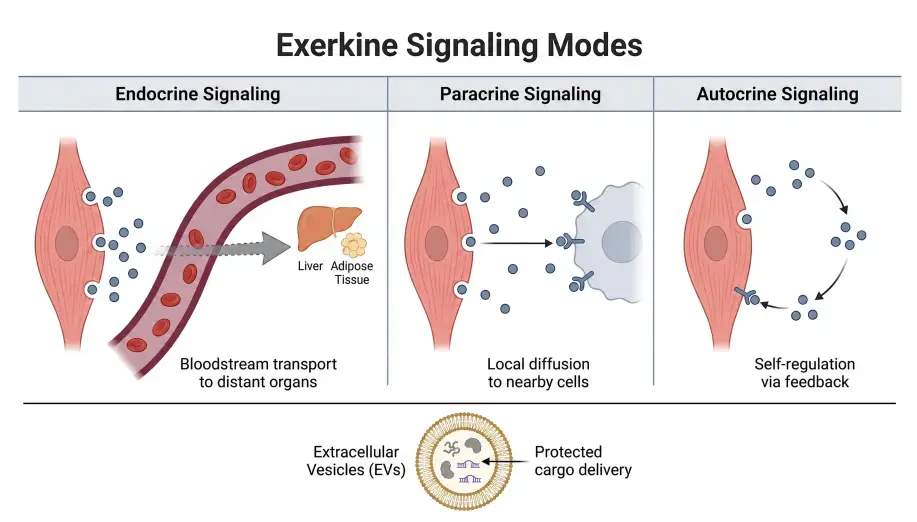
Exerkines are signaling molecules released into circulation in response to exercise. The term is a portmanteau of "exercise" and "kines" (from the Greek for movement/messenger), modeled on the earlier concept of myokines. The basic idea is that physical activity isn't just mechanical work on muscles—it triggers tissues throughout the body to secrete bioactive substances that travel through the bloodstream and produce many of exercise's well-documented health benefits, from improved metabolism to better cognition.
Where they come from. Exerkines are secreted by multiple organs and tissues, not just skeletal muscle. The major sources include:
- Muscle (myokines) — the most studied category, since contracting muscle is a massive endocrine organ
- Adipose tissue (adipokines) — fat releases different signals depending on whether it's subcutaneous, visceral, or brown fat
- Liver (hepatokines)
- Heart (cardiokines)
- Plus contributions from bone (osteokines), kidney, gut, and even neurons
They also travel in different forms—as free proteins/peptides, as metabolites, as nucleic acids (microRNAs), and packaged inside extracellular vesicles like exosomes that shuttle cargo between tissues.
Notable examples. A few of the well-characterized ones:
IL-6 — released by muscle during contraction. This is a useful illustration of context-dependence: chronically elevated IL-6 from inflammation is harmful, but the transient spike from exercise has anti-inflammatory and metabolic-signaling effects. Same molecule, very different meaning depending on source and time course.
Irisin — cleaved from a precursor (FNDC5) and proposed to drive "browning" of white fat, increasing energy expenditure. Irisin has been somewhat controversial, with early measurement and methodological disputes, though interest has persisted.
- BDNF (brain-derived neurotrophic factor) — linked to the cognitive and mood benefits of exercise, supporting neuronal growth and plasticity.
- Cathepsin B, myostatin, FGF21, GDF15, and various microRNAs round out the commonly cited list.
Why the concept matters. Exerkines offer a mechanistic framework for "exercise as medicine"—explaining at a molecular level why physical activity helps with
- insulin sensitivity,
- cardiovascular health,
- neurodegeneration,
- cancer outcomes, and
- aging.
There's active research interest in whether some benefits could be captured pharmacologically (an "exercise pill"), though the prevailing view is that the orchestrated, multi-tissue, pulsatile nature of the real exercise response is very hard to replicate with a single drug.
A few honest caveats worth keeping in mind: much of the foundational work is in rodents, human translation is uneven, and individual molecules like irisin have had reproducibility problems. The field is genuinely promising but still maturing.
Claude AI - May 2026
A few Exerkine studies
- Exerkines and myokines in aging sarcopenia July 2025
- Exerkines, Nutrition, and Systemic Metabolism Jan 2024
- Exerkines and osteoarthritis Nov 2023
Related in Vitamin D Life
- Some vitamin D is stored in skeletal muscles – multiple studies
- Mechanisms of vitamin D action in skeletal muscle
- High intensity exercise increases Vitamin D Receptor activation for a few hours - Dec 2025
- Exercise and Vitamin D are synergistic - many studies
Omega-3 and Magnesium help
- Omega-3 helps muscles - many studies
- Magnesium helps muscles in more than 10 ways
- Reduce aging with Vitamin D, Omega-3, Magnesium and Exercise (Patrick video)
- Muscles improved in women with 50,000 IU vitamin D weekly (8 weeks) plus daily Magnesium – RCT
- Exercise Performance improved by Vitamin D or Magnesium – 2021