Lyme disease and Vitamin D Receptor - many studies
Statement by FDA commissioner: Lyme disease escaped from a US bio-lab - Dec 2025
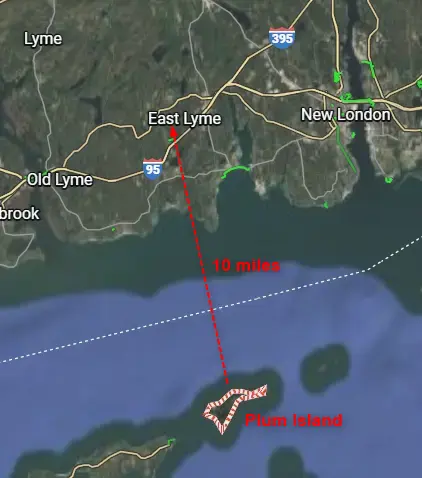
FDA Commissioner Makary States that Lyme Disease Came from Lab 257 on Plum Island
During a November 2025 conversation on the PBD Podcast, FDA Commissioner Marty Makary stated that “with a high degree of probability,” Lyme disease came from the U.S. biodefense “Lab 257 on Plum Island just outside of Connecticut.”
Makary elaborated that the pathogenic agent was developed primarily by the German veterinarian and animal virus specialist, Dr. Erich Traub, who previously conducted biological warfare research for Nazi Germany and was brought to the United States after the war as part of Operation Paperclip to acquire German scientific research while denying it to the Soviets.
Lyme, COVID, and various cancers have learned to protect themselves by deactivating the Vitamin D receptor.
Receptor deactivation is not detectable by standard vitamin D tests, a person with Lyme disease
- can have a good blood level of vitamin D but a poor level of vitamin D in tissues.
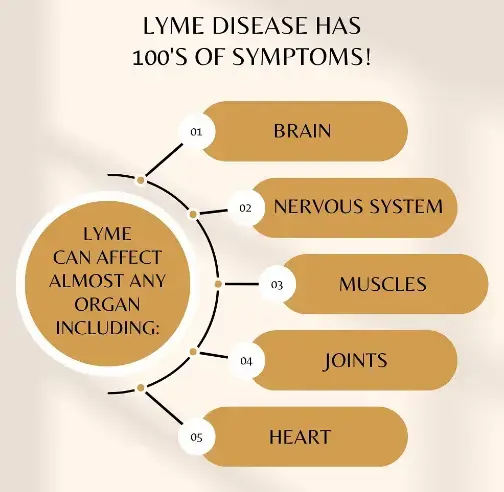
The poor activation can result in many other health problems, such as autoimmune diseases
There are many ways to restore the activation of the Vitamin D receptor
- Person with Lyme should try VDR activators
📄 Resveratrol and Curcumin have been found to help
- Person with Lyme should try VDR activators
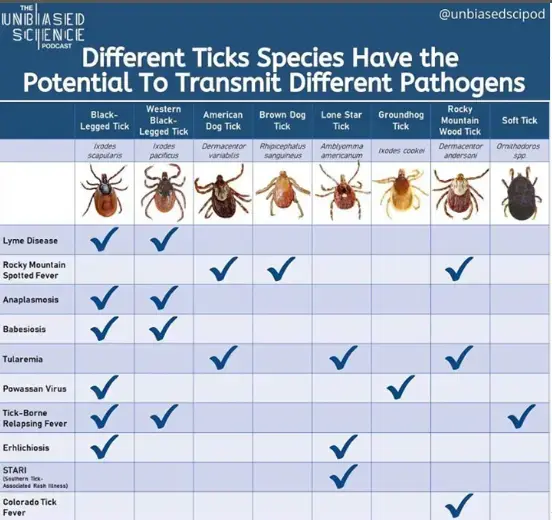
bloodthirsty ticks give lyme disease to animals, pets, and humans
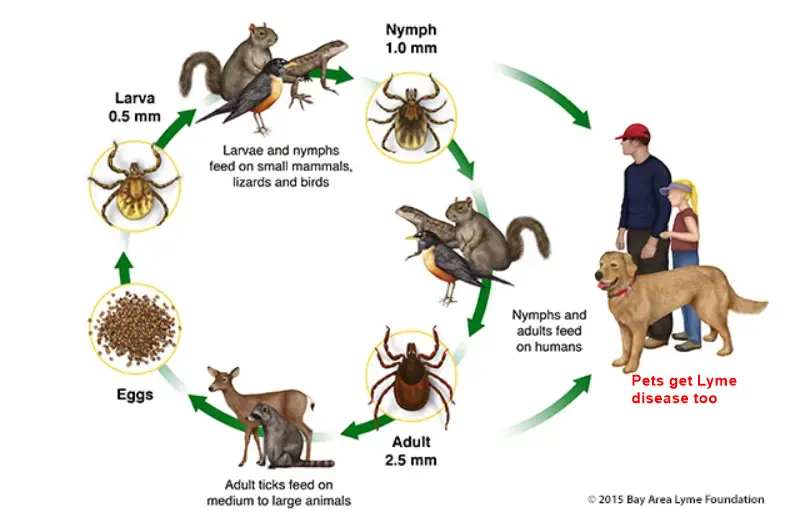
Lyme Disease Blocks Vitamin D Absorption by 80 X - video March 2024
Lyme disease reduced Vitamin D Receptor by 8X to 50X - June 2019
Vitamin D Receptor - activation and deactivation- self-hacked June 2019
Lyme/Borrelia – Live Borrelia reduces VDR by 50 times (in monocytes) and “dead” Borrelia reduces it by 8 times 63
- This could explain why people develop autoimmune conditions after Lyme infection.
Half of NE US Ticks have Lyme Disease - Jan 2025
Vitamin D Receptor - reduced by Lyme, easily restored by supplements
Chronic Lyme disease - includes Vitamin D Receptor
The following text which is copied from the source, and has no active hyperlinks
Borrelia and the VDR
In the arms race of host–microbe co-evolution, successful microbial pathogens have evolved ingenious ways to evade host immune responses.9)
Studies have indicated that the dysregulation of VDR may lead to exaggerated inflammatory responses, raising the possibility that defects in Vitamin D and VDR signaling transduction may be linked to bacterial infection and chronic inflammation. Further characterization of Vitamin D/VDR will help elucidate the pathogenesis of various human diseases and in the design of new approaches for prevention and treatment. Jun Sun 10)
Since the VDR is at the heart of the innate immune system, bacteria can survive by discovering how to disable it through a variety of different actions. Actions accumulate and are more powerful than individual actions. In keeping with evolutionary theory, a growing number of substances and species have been shown to downregulate the activity of the VDR, one of which is Borrelia burgdorferi. Live Borrelia burgdorferi reduced VDR expression in monocytes (phagocytes) by 50 times, and lysates (“dead” Borrelia) reduced it by 8 times 11)
8) Human Tick-Borne Diseases in Australia., Dehhaghi M, Kazemi Shariat Panahi H, Holmes EC, Hudson BJ, Schloeffel R, Guillemin GJ, Front Cell Infect Microbiol9p3(2019)
9) Microbial manipulation of receptor crosstalk in innate immunity. Hajishengallis G, Lambris JD, Nat Rev Immunol11p187-200(2011 Mar)
10) Vitamin D and mucosal immune function. Sun J, Curr Opin Gastroenterolp(2010 Jul 15) 📄 Download the PDF from Vitamin D Life
11) Activation of human monocytes by live Borrelia burgdorferi generates TLR2-dependent and -independent responses which include induction of IFN-beta. Salazar JC, Duhnam-Ems S, La Vake C, Cruz AR, Moore MW, Caimano MJ, Velez-Climent L, Shupe J, Krueger W, Radolf JD, PLoS Pathog5pe1000444 (2009 May) 📄 Download the PDF from Vitamin D Life
Lyme Disease and Vitamin D Receptor Activators
Note: I do not have Lyme Disease, but have a poor vitamin D receptor
Nature's Essentials Resveratrol 500mg is an Amazon Resveratrol with high bio-availability which I have been taking
Vitamin D Receptor category
Diseases associated with a poor Vitamin D Receptor
Vitamin D Receptor Activators
Omega-3, Magnesium, Zinc, Quercetin, non-daily Vit D, Curcumin, intense exercise, Ginger, Essential oils, etc Note: The founder of Vitamin D Life uses 10 of the 13 known VDR activators
Vitamin D Life - Vitamin D Receptor deactivated by some health problems - many studies
Things found to fight Lyme Disease (Perplexity AI Oct 2024
Have any of the following been found to prevent or treat Lyme Disease: Resveratrol Omega-3 Magnesium Zinc Quercetin Curcumin Berberine Butyrate Sulforaphane Ginger "Essential oils" "intense exercise"?
Based on the available research, here's what we know about the potential of those compounds for preventing or treating Lyme disease:
Resveratrol
Resveratrol, found in Japanese knotweed, has shown some promise:
It has antimicrobial and anti-inflammatory properties that may help against Lyme disease 1 5
A 2020 Johns Hopkins study found Japanese knotweed extract had greater activity against Borrelia burgdorferi (the Lyme bacteria) than some antibiotics 5
Resveratrol appears safe at typical supplement doses, though it may have blood-thinning effects 5
Other Compounds
Omega-3, magnesium, zinc, quercetin, curcumin: While these have general anti-inflammatory properties, there's no strong evidence specifically for Lyme disease prevention or treatment.
Berberine: Some preliminary research suggests potential antimicrobial activity, but more studies are needed on its effects for Lyme disease.
Butyrate, sulforaphane, ginger: No significant evidence was found regarding their use for Lyme disease.
Essential oils: Oregano and thyme oils have shown some in vitro activity against B. burgdorferi, but clinical evidence is lacking 6
Exercise
While exercise may have general health benefits, there's no evidence that "intense exercise" specifically prevents or treats Lyme disease.
Key Points
None of these compounds are proven treatments for Lyme disease.
The most effective prevention methods remain avoiding tick bites and prompt tick removal 8
Antibiotics are the standard treatment for diagnosed Lyme disease 8
It's important to consult with a healthcare provider for proper diagnosis and treatment of Lyme disease rather than relying solely on supplements or alternative remedies.
20,900 hits as of Dec 2025 on VDR activators and Lyme Disease
The Therapeutic Potential of Topically Applied Essential Oils in Preventing or Treating Early Borrelia burgdorferi Infection: A Review Sept 2025 Garlic, Oregano, Cinnamon bark, Clove bud, Thyme, Tea tree PDF
Synergistic Antimicrobial Potential of Herbal and Essential Oil Compounds Against Borrelia burgdorferi and Other Bacterial Pathogens Jan 2025 Resveratrol occurs 9 times
Characteristics of Clinics Offering Nontraditional Lyme Disease Therapies in Lyme Endemic States of the United States - Jan 2025 FREE PDF
- scores of therapies are described - costing $200 to $2,000. No mention of vitamin D receptor
A Comprehensive Review of Herbal Supplements Used for Persistent Symptoms Attributed to Lyme Disease March 2023 FREE PDF
Lost in Lyme: The Therapeutic Use of Medicinal Plants in Supporting People with Lyme Disease Amazon book Google preview of book
Recovery from Lyme Disease: The Integrative Medicine Guide to Diagnosing and Treating Tick-Borne Illness - 2021 Amazon
The Use of Natural Bioactive Nutraceuticals in the Management of Tick-Borne Illnesses - July 2023 FREE PDF
Plants supporting the treatment of Lyme disease - Sept 2023 FREE PDF
Liberating Yourself from Lyme: An Integrative and Intuitive Guide to Healing Lyme Disease Jan 2021 Amazon Book Google look inside of the book
Both Liposomal Glutathione and D-Ribose Help with Lyme Disease Problems Perplexity AI Fev 2026
Yes — both liposomal glutathione and D-Ribose target distinct but important aspects of Lyme disease pathology, and both are used by Lyme-literate physicians as supportive therapies. They address different mechanisms: glutathione tackles oxidative stress and detoxification, while D-Ribose addresses cellular energy depletion.
How Lyme Disease Creates the Problems These Supplements Target
Lyme disease, caused by Borrelia burgdorferi, is fundamentally a disease of inflammation [^3]. The bacteria trigger an immune response that generates massive amounts of free radicals and oxidizing agents, leading to oxidative stress that overwhelms the body's antioxidant defenses [^1][^3]. Simultaneously, the Lyme bacteria damage mitochondria — the cell's energy factories — reducing ATP production [^7]. This creates a two-pronged problem: toxic overload plus energy depletion, which accounts for the hallmark symptoms of chronic fatigue, brain fog, joint pain, and neurological dysfunction.
Liposomal Glutathione for Lyme Disease
Glutathione is the body's master antioxidant and detoxification agent, found in every cell [^7]. In Lyme patients, glutathione levels become depleted as cells struggle to keep up with the oxidative assault from the infection and from antibiotics used to treat it [^4]. Replenishing glutathione can help in several specific ways:
- Herxheimer die-off reactions: When Lyme bacteria are killed (by antibiotics or the immune system), they release toxins and free radicals that trigger inflammatory cytokines. Glutathione helps the liver clear these toxins and neutralizes the free radicals, reducing die-off severity [^7].
- Liver detoxification: Glutathione supports both Phase I and Phase II liver detox — critical because the liver processes toxins released by dead Lyme organisms. This is more effective than milk thistle alone, which primarily supports Phase I [^7].
- Brain fog and neurological symptoms: Nerve cells are particularly vulnerable to glutathione depletion. Lyme-literate physician Marty Ross MD reports marked improvements in cognition and neuropathy when patients supplement with glutathione [^7]. Global Lyme Alliance patient Jennifer Crystal described glutathione as the treatment that cleared her persistent brain fog during graduate school [^15].
- Liver protection: Certain antibiotics used to treat Lyme can inflame the liver. Glutathione lowered elevated liver enzymes (ALT/AST) about 90% of the time in clinical practice [^7].
Why Liposomal Form Matters
Standard oral glutathione is largely destroyed by stomach acid and digestive enzymes, yielding only about 10–20% absorption [^28]. Liposomal glutathione wraps the molecule in phospholipid bubbles that survive digestion, achieving 80–90% absorption rates [^28]. Studies show liposomal glutathione increases whole blood glutathione by 40% and glutathione in immune cells by 100% after just two weeks, with corresponding 35% reductions in oxidative stress markers [^25]. This makes it a practical daily alternative to IV glutathione, which delivers near-100% bioavailability but requires clinic visits and is expensive [^17][^23].
Dr. Ross recommends liposomal glutathione 500 mg once or twice daily for Lyme patients. For those who cannot tolerate it, precursor supplements (NAC 200 mg, alpha lipoic acid 200 mg, glutamic acid 200 mg, three times daily) can help the body build its own glutathione [^7].
D-Ribose for Lyme Disease
D-Ribose addresses the energy crisis in Lyme disease from a completely different angle. It is a naturally occurring pentose sugar that serves as the rate-limiting building block for ATP synthesis [^24]. Under conditions of chronic infection and mitochondrial stress — both hallmarks of Lyme — cells become starved of ATP. The normal pathway to produce D-Ribose (the pentose phosphate pathway) is slow, and supplemental D-Ribose bypasses this bottleneck to accelerate ATP regeneration [^24][^16].
Evidence for D-Ribose in Fatigue and Pain
The strongest clinical data comes from chronic fatigue syndrome (CFS) and fibromyalgia, conditions that share substantial symptom overlap with chronic Lyme:
- A pilot study of 41 CFS/fibromyalgia patients given 5g of D-Ribose three times daily showed significant improvements in energy (+45%), sleep, mental clarity, pain intensity, and well-being (+30%), with 66% of patients experiencing meaningful benefit [^2].
- A larger multi-center study of 257 CFS/fibromyalgia patients found a 61.3% improvement in energy with 5g twice daily for three weeks [^18].
- Lyme-specific practitioner Dr. Bill Rawls notes that D-Ribose is "especially true" for improving recovery in individuals with chronic Lyme disease, and can reduce post-exertional pain [^8].
Clinical Protocol Inclusion
The BC Women's Hospital Complex Chronic Diseases Program includes D-Ribose at 5g three times daily in its clinical protocol for chronic/post-treatment Lyme disease syndrome [^14]. This dosage aligns with the research studies showing benefit.
Complementary Mechanisms
These two supplements are not redundant — they work on different parts of the Lyme disease problem:
| Aspect | Liposomal Glutathione | D-Ribose |
|---|---|---|
| Primary target | Oxidative stress, toxin removal [^7] | ATP/energy production [^24] |
| Key symptom addressed | Brain fog, Herxheimer reactions [^15] | Fatigue, post-exertional pain [^8] |
| Mechanism | Neutralizes free radicals, supports liver Phase I & II detox [^7] | Bypasses rate-limiting step in ATP synthesis [^24] |
| Typical dose | 500 mg 1–2x/day [^7] | 5g 2–3x/day [^14][^8] |
| Side effects | Generally well-tolerated [^7] | None expected; considered a functional food [^8] |
| Evidence quality | Clinical experience + mechanistic studies [^7][^25] | Small open-label trials in CFS/FM [^2][^18] |
Practical Considerations
Both supplements can be used together and address the compounding nature of Lyme pathology: mitochondrial damage reduces energy (→ D-Ribose helps), while oxidative stress and toxin buildup impair cell repair and brain function (→ glutathione helps) [^7][^24]. Neither is a stand-alone treatment for Lyme disease — they are supportive therapies typically used alongside antimicrobial protocols.
One important caveat: while the mechanistic rationale is strong for both, the clinical evidence consists primarily of small, open-label studies and clinical experience reports rather than large randomized controlled trials [^16][^2]. That said, both have favorable safety profiles, making them low-risk additions to a Lyme treatment protocol.
Feb 2026 References
IV Glutathione Therapy for Lyme Disease - IV therapy helps to replenish the body's glutathione levels. Glutathione is often used to treat a ra...
The use of D-ribose in chronic fatigue syndrome and ... - by JE Teitelbaum · 2006 · Cited by 175 — Conclusions: D-ribose significantly reduced clinical sympto...
Antioxidant Treatment for Lyme Disease - If you have oxidative stress and inflammation, you are low on glutathione, which can help the body s...
Antioxidant Therapy - Increasing glutathione production in a Lyme patient can help combat free radicals. Glutathione serve...
Glutathione: The Great Fixer - First, it helps the liver remove toxins released from inside of the dead lyme germs so they do not t...
D-ribose - Herbs Database - D-ribose can also reduce post-exertional pain. Suggested Dosage: 1 gram (1000 mg) two to three times...
Clinical Protocol “Chronic Lyme Disease” or “Post- ... - Treatment of Lyme Disease is provided in Primary Care (early Lyme ... 5.2 D-Ribose. •. 5 g TID. 5.3 ...
Utilizing Glutathione for Lyme Disease, a Patient's ... - Glutathione has specific benefits for Lyme disease patients. As it did for me, it can help combat He...
Relationship: Mitochondria and D-Ribose - Some evidence suggests that D-Ribose may improve subjective measures of energy, reduce fatigue, and ...
How does glutathione IV therapy compare to oral supplements? - Lower Bioavailability: Even with liposomal forms, absorption may not match IV levels. Slower Onset: ...
Does D-Ribose benefit people chronically depleted of energy? - The natural process to replenish cellular energy is very slow, especially in heart and muscle tissue...
The State of Glutathione Research - Researched Nutritionals - Improvements in clinical function have been found with the liposomal oral form. Intravenous glutathi...
Understanding D-Ribose and Mitochondrial Function - PMC - by DE Mahoney · 2018 · Cited by 76 — D-ribose is a naturally occurring monosaccharide found in the c...
Why Doctors Call Glutathione the "Master Antioxidant" (2025 Guide) - Liposomal supplements offer better absorption than standard oral options, though IV therapy delivers...
Top 7 FAQs On Liposomal Glutathione vs. Traditional Glutathione - Regular glutathione gives you maybe 10-20% absorption on a good day. Liposomal versions can hit 80-9...
Lyme Disease - 500,000 Americans annually - more than Breast Cancer - Mercola Sept 2024
- " There are more cases of Lyme disease than HIV and breast cancer combined.
Of those 500,000, about 10% to 20% will stay sick for some period of time . We now believe that something on the order of 2 million people suffer the aftereffects of Lyme disease in the United States."
The phrase "Vitamin D" does not occur once
See also: Lyme and Vitamin D on the web
In-depth coverage of Lyme disease - 2024 FREE PDF
Five Common Nutritional Deficiencies In People With Chronic Lyme Disease April 2016
- Vitamin D3, Magnesium, Zinc
What's the deal with Vitamin D? LymeMD 2008
Appears that people trying to treat Lyme with just daily vitamin D get to toxic levels without any benefit
No mention of the Vitamin D Receptor which woul greatly reduce the amount of Vitamin D needed
- "According to the U.S. Centers for Disease Control and Prevention (CDC), an estimated 329,000 Americans are diagnosed with Lyme disease each year, although some data suggest it may actually be over 444,000.1 While exact numbers are difficult to ascertain, what is known is that the prevalence is rising."
Lyme Disease rate increased 4X in 28 years
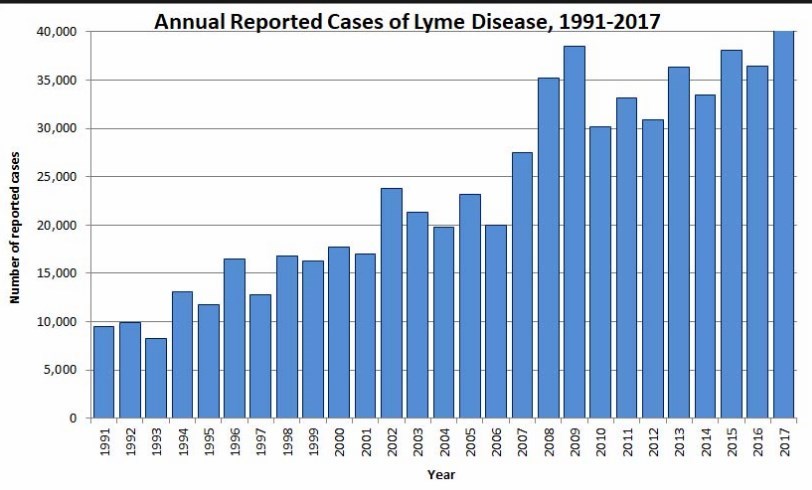
Possible reasons for increase include:
- lower D in population,
- increasing rate of poor Vitamin D Receptor,
- warmer climate
- more ticks
Lyme Disease Is Baffling, Even to Experts
Took 16 years to get her problem correctly diagnosed
"Reported cases increased almost fivefold from 1992 to 2017, and the Centers for Disease Control and Prevention estimates that annual incidences have risen to more than 300,000, and may even range above 400,000"
"After 40 years in the public-health spotlight, Lyme disease still can’t be prevented by a vaccine; eludes reliable testing; and continues to pit patients against doctors, and researchers against one another."
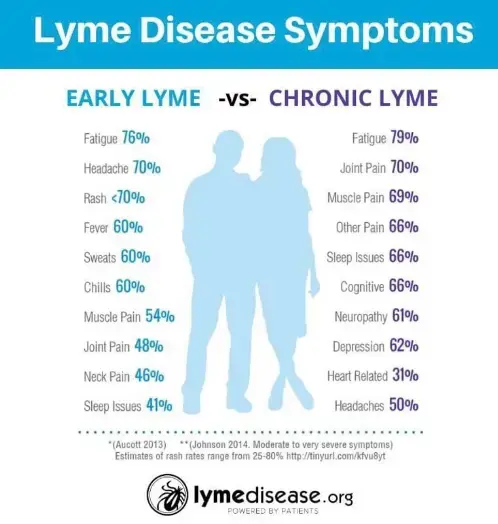
"A significant percentage of people who had Lyme symptoms and later tested positive for the disease had never gotten the rash. Others had many characteristic symptoms but tested negative for the infection, and entered treatment anyway. Most startling, a portion of patients who had been promptly and conclusively diagnosed with Lyme disease and treated with the standard course of doxycycline didn’t really get better."
Lyme Disease Map 2022
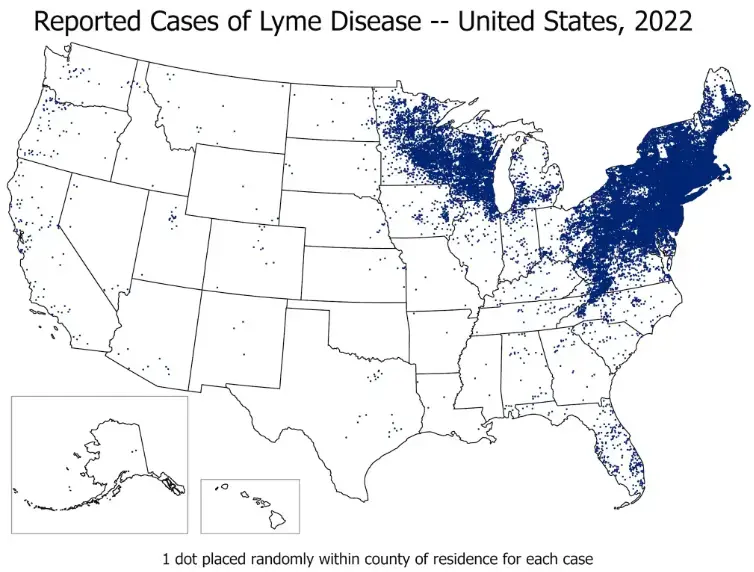
Map 2015

It's Time to Get Serious about Tick-Borne Diseases - Scientific American Aug 2019
Scientific American Vitamin D NOT mentioned
"Today another epidemic rages unchecked: the number of Lyme disease cases has doubled since 2004, for a total of over 400,000."
"At least 10 to 20 percent stay sick for a year, with 5 percent still suffering 15 years later—this among patients receiving early treatment, who have the best outcomes"
67 Lyme Disease Clinical trials as of 2019
"In 2017, mosquito-borne West Nile virus, which currently infects about 2,000 people annually in the U.S. received $42 million in support from the U.S. National Institutes of Health. Lyme disease, with 20 times the number of reported cases, got half as much, a figure that has changed little in a decade"
Lyme Disease charts on the web
https://www.instagram.com/explore/search/keyword/?q=lyme%20diseqse