
Microplastics and Nanoplastics associated with 8 Cancers
Journals Biomedicines Volume 14 Issue 1 10.3390/biomedicines14010001
Microplastics and Nanoplastics in Cancer Progression: Biology and Public Health
by Richard Ponce-Cusi 1,*,†,Claudia Barletta-Carrillo 2,†ORCID andNesstor Pilco-Ferreto 1,†
Table of Contents
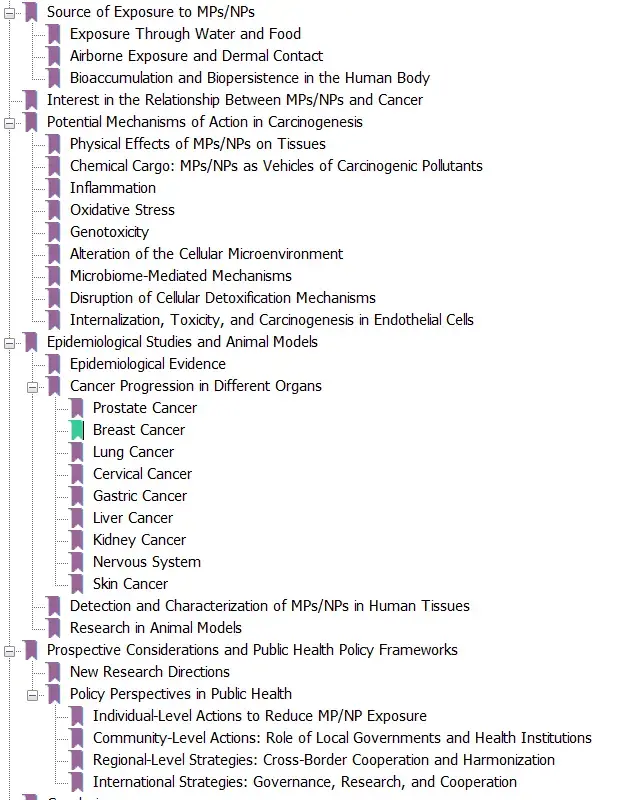
Microplastics and nanoplastics (MPs/NPs), emerging as pervasive environmental contaminants, have raised growing concern due to their potential implications for human health. Among their diverse biological effects, recent evidence highlights their capacity to cross biological barriers, accumulate in tissues, and interact with cellular components in ways that may promote carcinogenesis. MPs/NPs can cause oxidative stress, inflammation, and epithelial barrier dysfunction, leading to cellular homeostasis disruption. Their interaction with endothelial cells and immune components further exacerbates pro-tumorigenic processes, including angiogenesis, immune evasion, and epithelial–mesenchymal transition (EMT), thereby potentially facilitating tumor initiation and progression. At the cellular level, these particles are internalized through various endocytic pathways, where they are associated with oxidative stress, inflammation, DNA damage, and barrier dysfunction—processes that have been linked to carcinogenesis. This review synthesizes current evidence on the cellular and molecular mechanisms through which MPs/NPs may contribute to cancer development, with particular emphasis on their interactions with endothelial cells and the tumor microenvironment. It highlights the need for further mechanistic and epidemiological studies to clarify the potential role of these particles in carcinogenesis. Given the increasing global production and environmental ubiquity of plastic particles, understanding their direct contribution to cancer development is critical for advancing both public health strategies and environmental regulations.