
Ultra-processed food health problems reduced by Liposomal Glutathione
Might Liposomal Glutathione Reduce Health Problems of Ultraprocessed Foods?
The short answer is no—liposomal glutathione cannot truly "reduce health problems" of ultraprocessed foods in a way that makes continued UPF consumption safe.
However, the more nuanced answer is that glutathione supplementation may serve as valuable adjunctive support during dietary transition away from ultraprocessed foods, helping to mitigate some oxidative stress and support detoxification while eating habits improve. This distinction is critical for understanding both the promise and limitations of this supplementation strategy.
The Multifaceted Harm Cascade of Ultraprocessed Foods
Ultraprocessed foods (UPFs) inflict damage through multiple, synergistic mechanisms that extend far beyond simple "poor nutrition." A landmark 2024 umbrella review in The BMJ analyzing nearly 10 million participants found that greater UPF exposure was associated with 32 adverse health parameters, including significantly elevated risks of all-cause mortality (21% increase), cardiovascular death (66% increase), type 2 diabetes, mental health disorders, and various cancers. Understanding how UPFs cause this harm is essential for evaluating whether glutathione can counteract these effects. bmj
Oxidative Stress and InflammationUPFs generate substantial oxidative stress through multiple pathways. Research on older adults with metabolic syndrome consuming high levels of UPFs revealed dramatically altered biomarkers: decreased antioxidant enzyme activity (superoxide dismutase down 24%, catalase down 17%), elevated pro-oxidant enzymes (xanthine oxidase up 35%, myeloperoxidase up 27%), and significantly increased inflammatory cytokines including TNF-α (38% higher), IL-6 (37% higher), and IL-15 (38% higher). This pro-inflammatory state wasn't merely correlative—the oxidative stress directly promoted immune cell pre-activation and systemic inflammation. pmc.ncbi.nlm.nih
Advanced Glycation End Products (AGEs)Perhaps the most insidious component of UPF harm involves AGEs—stable compounds formed when reducing sugars react with proteins or lipids during high-temperature processing. UPFs represent a distinct AGE source due to their complex, multi-step industrial processing. Heating even standard ingredients at 180°C for 13 minutes dramatically increases AGE content, with prominent forms like carboxymethyllysine (CML) and carboxyethyllysine (CEL) rising significantly. academic.oup
Once consumed, dietary AGEs accumulate systemically. A 2025 study demonstrated that long-term high-AGE diet consumption in mice resulted in 1.2-fold higher serum AGE levels and 1.3-fold higher fecal levels. These AGEs then bind to RAGE receptors on cell surfaces, triggering oxidative stress, inflammation through NF-κB activation, mitochondrial dysfunction, and cellular apoptosis. Critically, AGE accumulation depletes cellular glutathione, creating a vicious cycle. nature
Gut Microbiome DisruptionFood additives—particularly emulsifiers like carboxymethylcellulose (CMC), mono- and diglycerides (MDG), lecithin, and polysorbate 80—fundamentally alter gut microbiota composition and function. A comprehensive 2024 study examining common dietary emulsifiers found that all tested compounds induced gut microbiota dysbiosis, with MDG specifically causing bacterial encroachment into the inner mucus layer and significantly elevating circulating lipopolysaccharide (LPS). This LPS translocation triggers low-grade systemic inflammation characteristic of metabolic syndrome. nature
The high-AGE diet example is particularly revealing: feeding mice a high-AGE diet enriched pathogenic, LPS-producing genera including Alistipes, Desulfovibrio, and Helicobacter. Meanwhile, preservatives like sodium benzoate and potassium sorbate—designed to kill foodborne pathogens—indiscriminately eliminate beneficial commensal bacteria, allowing opportunistic pathogens to colonize the gut. biologicalsciences.uchicago
Micronutrient DepletionUPFs are nutritionally impoverished compared to whole foods. A representative Brazilian dietary study found that 10 of 17 examined micronutrients existed in UPFs at less than half the concentration found in natural or minimally processed foods, including vitamin B12, C, D, E, niacin, pyridoxine, copper, magnesium, manganese, and zinc. Each 10% increase in UPF consumption correlated with significant decreases in 11 micronutrients. pmc.ncbi.nlm.nih
Children face particularly severe consequences. Spanish children in the highest tertile of UPF consumption had 2.57 times higher odds of inadequate intake of three or more micronutrients compared to the lowest tertile. This matters profoundly because even subclinical micronutrient deficiencies impair immune function, cognitive development, and metabolic health. pmc.ncbi.nlm.nih
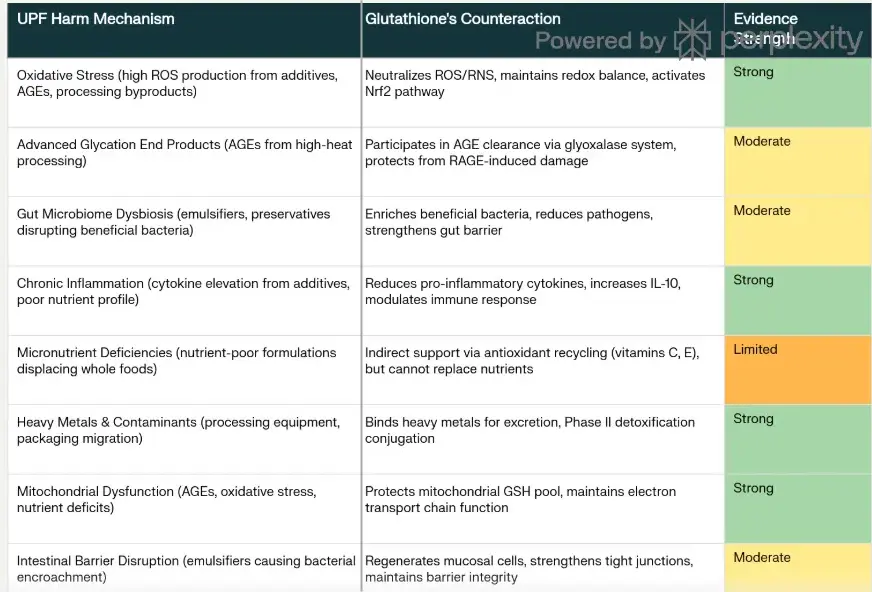
Glutathione: The Master Antioxidant's Multifunctional Defense
Glutathione (GSH), a tripeptide composed of cysteine, glycine, and glutamic acid, serves as the body's most abundant intracellular antioxidant and a critical coordinator of cellular redox balance. Its relevance to UPF-induced damage stems from its diverse protective functions that theoretically counteract multiple UPF harm mechanisms. plminstitute
Antioxidant and Anti-Inflammatory ActionGSH's primary function involves neutralizing reactive oxygen species (ROS), reactive nitrogen species (RNS), and reactive sulfur species through redox cycling—donating electrons to quench free radicals while being oxidized to glutathione disulfide (GSSG), then regenerated back to GSH by glutathione reductase using NADPH. This antioxidant capacity directly opposes the oxidative stress generated by UPFs. plminstitute
Clinical evidence supports GSH's anti-inflammatory effects. Research on synovial fibroblasts demonstrated that GSH supplementation significantly reduced pro-inflammatory cytokines IL-6, TNF-α, and IL-1β while increasing the anti-inflammatory cytokine IL-10. The mechanism involved upregulating PTEN expression and downregulating the PI3K/AKT inflammatory pathway. In HIV patients, 13 weeks of liposomal GSH supplementation substantially increased Th1 cytokines (IL-12, IFN-γ, TNF-α, IL-1β) while decreasing immunosuppressive cytokines (IL-10, TGF-β) and the pro-inflammatory IL-6. pmc.ncbi.nlm.nih
Mitochondrial ProtectionMitochondria—simultaneously the cell's power center and a major ROS source—cannot function without adequate glutathione. Mitochondrial GSH (mGSH) represents approximately 10% of total cellular glutathione but plays disproportionate protective roles. Since mitochondria lack catalase, GSH-dependent pathways (glutathione peroxidase and peroxiredoxin) handle the majority of hydrogen peroxide detoxification. pmc.ncbi.nlm.nih
Mitochondrial GSH depletion leads to compromised ATP production, increased ROS generation, cellular senescence, and age-related pathology. A 2023 Science paper identified the first mitochondrial glutathione sensor—a protein that senses, regulates, and delivers GSH into the mitochondrial interior. When GSH levels aren't precisely maintained, oxidative stress cascades through multiple systems, contributing to cancer, diabetes, metabolic disorders, and cardiovascular disease. rockefeller
Detoxification of Heavy Metals and XenobioticsGSH participates centrally in Phase II detoxification, wherein glutathione S-transferase (GST) enzymes catalyze the conjugation of electrophilic compounds—including heavy metals, AGEs, and food additive metabolites—with glutathione, converting them into water-soluble compounds excretable through urine or bile. This chelation process reduces toxic burden on organs and prevents cellular damage. cymbiotika
Research confirms GSH's protective capacity against heavy metal toxicity. GSH binds lead, mercury, cadmium, and other metals, forming non-toxic complexes that facilitate sequestration away from sensitive cellular sites. Several studies demonstrate induction of GSH-metal complexes following metal exposure. Importantly, GSH also participates in AGE clearance pathways, including the glutathione-dependent glyoxalase system and fructosamine kinases. alzdiscovery
Gut Microbiome ModulationEmerging evidence suggests GSH influences gut microbial composition. A six-month randomized clinical trial in Indian adults with type 2 diabetes found that 500mg daily oral glutathione supplementation—alongside standard antidiabetic treatment—significantly altered gut microbiome composition. Beneficial genera including Megasphaera, Bacteroides, and Megamonas were significantly enriched, while pathogenic Escherichia/Shigella was substantially depleted. The authors concluded that "GSH supplementation along with antidiabetic treatment helps restore the gut microbiome by enriching beneficial bacteria of healthy gut and reducing significantly the load of pathogenic bacteria". pubmed.ncbi.nlm.nih
GSH also strengthens the intestinal barrier. Mucosal cells produce glutathione as an essential component of maintaining gut barrier integrity and protecting against damage. Studies demonstrate that adequate GSH levels help heal, strengthen, and regenerate cells along the gut lining. This protection theoretically counteracts emulsifier-induced barrier disruption and prevents "leaky gut" wherein increased intestinal permeability allows larger molecules and bacterial products to enter circulation. performancelab
Liposomal Delivery: Solving the Bioavailability Challenge
Standard oral glutathione faces a fundamental problem: substantial degradation during digestion before reaching systemic circulation. Multiple studies confirm poor bioavailability of conventional oral GSH supplements. One controlled trial administering 500mg twice daily for four weeks to 40 healthy adults showed no significant change in serum glutathione levels. pmc.ncbi.nlm.nih
Liposomal technology addresses this limitation through lipid encapsulation. Liposomes are tiny spherical structures composed of natural phospholipids that encapsulate and protect compounds, enhancing absorption and protecting against oxidation and degradation. By wrapping glutathione in fat-soluble liposomes, the formulation survives stomach acid and digestive enzymes, delivering intact GSH to intestinal cells for absorption. renuebyscience
Clinical Evidence for Liposomal GlutathioneThe most robust evidence comes from a randomized, double-blind, placebo-controlled pilot trial conducted in 12 healthy adults. Participants received either 500mg or 1000mg liposomal GSH daily for one month, with blood analyzed at baseline and after 1, 2, and 4 weeks. Results were striking: pmc.ncbi.nlm.nih
- Whole blood GSH increased 40% after 2 weeks
- Erythrocyte GSH increased 28% after 1-2 weeks
- Plasma GSH increased 25% after 2 weeks
- Peripheral blood mononuclear cell (PBMC) GSH increased 100% after 2 weeks renuebyscience
Critically, increases occurred across all blood compartments, suggesting systemic effects extending to less-accessible tissues. Oxidative stress biomarkers improved substantially: 8-isoprostane levels decreased 35% in the low-dose group at 2 weeks, while the oxidized-to-reduced glutathione ratio decreased 18-20% in the high-dose group at weeks 1 and 2. pmc.ncbi.nlm.nih
Immune function enhanced significantly. Natural killer cell cytotoxicity—critical for fighting infections and cancer surveillance—increased 400% in the low-dose group and 210% in the high-dose group after 2 weeks. Lymphocyte proliferation increased 60% in the high-dose group after 2 weeks. The timeline of immune improvements coincided with PBMC GSH increases, suggesting direct mechanistic linkage. renuebyscience
Importantly, effects manifested rapidly—as early as one week—and occurred at both tested doses (500mg and 1000mg daily). Compliance was high (109%) and no serious adverse effects were reported. pmc.ncbi.nlm.nih
Comparison with Alternative Approaches
While liposomal GSH shows promise, alternative strategies merit consideration. N-acetylcysteine (NAC)—a stable cysteine prodrug and glutathione precursor—has extensive clinical use for acetaminophen toxicity, HIV/AIDS, cystic fibrosis, COPD, and diabetes. NAC provides cysteine, the rate-limiting amino acid for GSH synthesis. However, NAC's effectiveness varies; one study found that NAC supplementation failed to maintain intracellular GSH levels under oxidative stress, while a cystine-based precursor (F1, containing cystine, glycine, selenomethionine, and glutamine) successfully maintained GSH at control levels at all tested doses. pmc.ncbi.nlm.nih
GlyNAC (glycine plus NAC) represents another effective approach, particularly for elderly populations. A randomized controlled trial in adults aged 60-85 found that combined doses of 4.8-7.2g daily for 14 days increased total blood glutathione by 10.47%. This dual-precursor strategy addresses potential limitations in both cysteine and glycine availability. frontiersin
The Synergistic Relationship with Vitamin D
An intriguing dimension of glutathione supplementation involves its bidirectional relationship with vitamin D—another nutrient highly relevant to immune function, inflammation, and metabolic health. Multiple studies demonstrate positive associations between vitamin D and glutathione levels. grassrootshealth
A cross-sectional study of 693 healthy adults found that vitamin D levels (25(OH)D) positively correlated with plasma glutathione and negatively correlated with oxidized glutathione (GSSG) and cysteine. More remarkably, a randomized controlled trial in 178 adults with type 2 diabetes found that vitamin D supplementation (400 IU daily for 90 days) resulted in a 2-fold increase in GSH levels—from 2.72 to 5.76 μmol/mL—while simultaneously decreasing inflammatory markers MCP-1 (by 50%) and IL-8 (by 58%). pubmed.ncbi.nlm.nih
The mechanism appears bidirectional. Vitamin D upregulates glutamate cysteine ligase and glutathione reductase—key enzymes in GSH synthesis. Conversely, glutathione may facilitate metabolic processes converting vitamin D into its active form and enhance vitamin D bioavailability. An in vitro study demonstrated that GSH deficiency downregulated vitamin D binding protein, 25-hydroxylase, and vitamin D receptor while upregulating CYP24a1 (which degrades active vitamin D). Improving GSH status reversed these effects, increasing 25(OH)D levels. cymbiotika
This synergy matters for UPF consumers, who may suffer concurrent vitamin D and glutathione deficiencies. The combination of liposomal glutathione and vitamin D supplementation could theoretically provide enhanced antioxidant defense, improved immune function, better metabolic regulation, and reduced inflammation compared to either nutrient alone. cymbiotika
Critical Limitations: Why Glutathione Isn't a UPF "Antidote"
Despite compelling mechanisms and promising preliminary evidence, multiple factors constrain glutathione's ability to truly protect against continued UPF consumption.
Inability to Replace Depleted Nutrients
While glutathione supports antioxidant recycling—regenerating vitamins C and E after oxidation—it cannot manufacture the vitamins, minerals, fiber, protein, and beneficial phytochemicals that UPFs lack. Each 10% increase in UPF consumption correlates with significant decreases in 11 essential micronutrients. Children consuming high UPF levels face 2.57 times higher odds of inadequate intake of multiple micronutrients. plminstitute
Glutathione supplementation, however optimized, cannot compensate for dietary deficiencies in vitamin B12, folate, vitamin D, vitamin E, iron, zinc, magnesium, selenium, and fiber. These nutrients perform functions entirely independent of glutathione's antioxidant and detoxification roles. Fortifying UPFs with isolated nutrients doesn't replicate whole food nutrition—whole foods contain what researchers call "nutritional dark matter," bioactive compounds beyond currently cataloged micronutrients that synergistically promote health. pmc.ncbi.nlm.nih
Overwhelming the System's CapacityThe human body possesses natural mechanisms for regulating glutathione levels. Excessive supplementation doesn't necessarily translate to proportionally greater benefits. The body's ability to utilize glutathione has inherent limits; excess amounts may simply be excreted without additional benefit. More concerning, extremely high doses might disrupt the body's natural antioxidant balance. setu
Continuous bombardment with UPF-derived oxidants, AGEs, emulsifiers, preservatives, and contaminants may overwhelm even elevated glutathione levels. The sheer volume and diversity of pro-inflammatory, pro-oxidant insults from habitual UPF consumption likely exceeds glutathione's neutralizing capacity. Research shows that high-dose antioxidant supplementation rarely prevents disease in populations continuing harmful exposures. jcadonline
Failure to Address Root Pathogenic MechanismsGlutathione cannot prevent initial AGE formation during food processing, stop emulsifiers from disrupting mucus architecture, prevent preservatives from killing beneficial gut bacteria, or block the displacement of nutrient-dense whole foods with energy-dense, nutrient-poor UPFs. These upstream mechanisms remain active regardless of glutathione status.
Consider emulsifiers: CMC, MDG, lecithin, and polysorbate 80 physically alter gut mucus layer structure and bacterial positioning. No amount of circulating glutathione prevents these additives from thinning the intestinal mucus layer or allowing bacterial encroachment toward epithelial cells. Similarly, preservatives' antimicrobial properties kill beneficial commensals alongside pathogens. Glutathione cannot resurrect eliminated Bifidobacterium or Lactobacillus populations. academic.oup
Inconsistent Commercial Product Quality
A sobering reality confronts consumers: most commercial "liposomal" glutathione products lack independent verification of true liposomal encapsulation. Many products combine glutathione with phospholipids without achieving genuine liposome formation, offering no absorption advantage over standard formulations. Others use proprietary blends hiding actual glutathione content, making dose-response comparisons impossible. purethera
Industry analysis reveals that "liposomal" has become more marketing buzzword than quality guarantee. Without standardized manufacturing protocols and third-party testing, consumers may pay premium prices for products delivering minimal bioavailable glutathione. This quality variability explains inconsistent research findings and consumer experiences. purethera
Time Requirements and Realistic ExpectationsClinical benefits from glutathione supplementation emerge gradually, not immediately. Most users notice visible health changes after 4-8 weeks of consistent supplementation combined with supportive lifestyle changes. Doubling doses doesn't accelerate improvement and may increase adverse effect risk. This timeline means glutathione offers no acute protection against individual UPF meals—it's a long-term cellular support strategy, not a post-meal detox pill. miduty
The Optimal Strategy: Adjunctive Support During Dietary Transition
The evidence suggests a nuanced role for liposomal glutathione: not as a shield enabling continued UPF consumption, but as transitional support during active dietary improvement. This reframes expectations appropriately.
Supporting Detoxification During ChangeFor individuals beginning to reduce UPF intake, glutathione supplementation may assist with clearing accumulated AGEs, heavy metals, and xenobiotic metabolites while new eating habits establish. The body's existing toxic burden doesn't immediately disappear upon dietary improvement—Phase II detoxification pathways benefit from adequate glutathione to process and excrete stored contaminants. cymbiotika
A six-month timeline of combined dietary transition and glutathione supplementation might look like this:
Weeks 1-4: Initiate liposomal glutathione (500-1000mg daily) while reducing UPF consumption by 25-50%. Blood GSH levels rise, oxidative stress markers begin declining, detoxification pathways upregulate.
Weeks 4-8: Continue supplementation while increasing whole food proportion to 70-80% of diet. Gut microbiome shifts begin as prebiotic fiber intake increases and additive exposure decreases. Inflammation markers improve.
Weeks 8-12: Sustained supplementation supports ongoing detoxification while dietary patterns stabilize. Micronutrient status improves from increased whole food consumption. Energy and immune function enhance synergistically.
This combined approach leverages glutathione's strengths—antioxidant protection, detoxification support, potential microbiome benefits—while simultaneously removing the source of harm through dietary improvement. pmc.ncbi.nlm.nih
Individual Circumstances Favoring SupplementationCertain populations may derive particular benefit from adjunctive glutathione support:
- Elderly individuals with declining endogenous glutathione synthesis capacity, particularly when transitioning diets frontiersin
- Those with pre-existing oxidative stress conditions (diabetes, metabolic syndrome, autoimmune disease) showing depleted baseline GSH levels renuebyscience
- Individuals with compromised detoxification due to genetic polymorphisms affecting glutathione synthesis or utilization pmc.ncbi.nlm.nih
- People during active dietary transition experiencing temporary increased detoxification demands as stored toxins mobilize amymyersmd
Contraindications and PrecautionsNot everyone should supplement with glutathione. Individuals with kidney disease must exercise caution since glutathione is processed by the kidneys; excess supplementation may strain compromised renal function.
People with asthma should monitor for bronchospasms, a potential adverse effect.
Pregnant and breastfeeding women should consult healthcare providers before supplementation. Anyone taking medications for chronic conditions should verify absence of drug interactions. cymbiotika
Practical Recommendations Based on Current Evidence
For those considering liposomal glutathione as part of a comprehensive health strategy, evidence-based guidance includes:
Prioritize Dietary Improvement First
No supplement compensates for continued poor dietary patterns. The foundational strategy must be replacing UPFs with whole foods: vegetables, fruits, legumes, nuts, seeds, whole grains, and minimally processed proteins. These foods provide not only superior micronutrient density but also fiber, polyphenols, phytoestrogens, and countless bioactive compounds that work synergistically to prevent disease. pmc.ncbi.nlm.nih
Research consistently shows that whole food consumption—not supplementation—correlates most strongly with reduced chronic disease risk and longevity. Even fortified UPFs fail to replicate whole food benefits. Any supplementation strategy should occur alongside dietary improvement, never as an alternative to it. pmc.ncbi.nlm.nih
If Supplementing, Choose Quality Products
Given widespread "liposomal" marketing without substance, consumers must demand: purethera
- Third-party testing verification confirming liposomal encapsulation
- Transparent labeling specifying actual glutathione content (not "proprietary blends")
- Manufacturing quality certifications (GMP, NSF, USP)
- Published stability data showing glutathione survival during storage
- Clinical research supporting the specific formulation's bioavailability
Alternatively, consider validated precursor approaches like NAC (600-1800mg daily) or GlyNAC (glycine + NAC at 4.8-7.2g combined daily), which have more consistent research support and better quality control. pmc.ncbi.nlm.nih
Optimize Glutathione Production Naturally
Dietary strategies powerfully influence endogenous glutathione synthesis:
- Consume sulfur-rich foods: garlic, onions, cruciferous vegetables (broccoli, Brussels sprouts, cabbage, cauliflower), eggs nordic
- Ensure adequate protein intake: provides cysteine, glycine, and glutamic acid—the three glutathione precursor amino acids nordic
- Include vitamin C-rich foods: citrus fruits, strawberries, bell peppers help regenerate glutathione sciencedirect
- Add selenium sources: Brazil nuts, fish, poultry support glutathione peroxidase function pmc.ncbi.nlm.nih
- Maintain vitamin D sufficiency: supports glutathione synthesis enzyme upregulation grassrootshealth
Consider Synergistic Supplementation
If supplementing, the antioxidant network concept suggests combining:
- Liposomal glutathione or NAC (500-1000mg or 600-1800mg respectively)
- Vitamin D3 (ensuring 25(OH)D levels reach 40-60 ng/mL through adequate dosing)
- Vitamin C (500-1000mg) to support glutathione recycling sciencedirect
- Vitamin E (mixed tocopherols, 200-400 IU) for lipid phase antioxidant protection pmc.ncbi.nlm.nih
- Alpha-lipoic acid (300-600mg) which activates Nrf2 and enhances GSH synthesis plminstitute
This network approach leverages synergistic interactions wherein antioxidants regenerate one another, maximizing protective capacity. nationalnutrition
Maintain Realistic Timelines
Expect gradual improvements over 4-12 weeks, not immediate effects. Consistency matters more than dosing intensity. Monitor subjective markers like energy levels, sleep quality, exercise recovery, and immune resilience rather than expecting dramatic visible changes. Consider baseline and follow-up blood work (GSH levels, oxidative stress markers, inflammatory cytokines) to objectively track progress if pursuing aggressive supplementation. miduty
Conclusion: A Tool for Transition, Not a Shield for Harm
The scientific evidence presents a nuanced picture. Liposomal glutathione possesses genuine biological activity—it raises blood glutathione levels, reduces oxidative stress markers, enhances immune function, supports detoxification pathways, and may beneficially modulate gut microbiome composition. The theoretical mechanisms whereby glutathione could counteract specific UPF-induced harms are biochemically sound and supported by cellular and animal research. renuebyscience
However, this mechanistic plausibility does not translate to an ability to "reduce health problems of ultraprocessed foods" in any clinically meaningful sense that permits continued UPF consumption. The scope, diversity, and magnitude of UPF-induced damage—spanning oxidative stress, AGE accumulation, gut dysbiosis, chronic inflammation, micronutrient depletion, and mitochondrial dysfunction—overwhelms any single intervention's protective capacity. bmj
Glutathione supplementation cannot:
- Replace the vitamins, minerals, fiber, and phytochemicals absent from UPFs
- Prevent AGE formation during high-heat processing
- Stop emulsifiers from disrupting gut barrier integrity
- Prevent preservatives from killing beneficial gut bacteria
- Address the obesogenic properties of energy-dense, nutrient-poor formulations
- Eliminate the hundreds of potentially harmful additives in UPF formulations
The optimal evidence-based approach employs liposomal glutathione as adjunctive support during active dietary transition away from ultraprocessed foods. In this context—combined with progressive replacement of UPFs with whole foods, adequate sleep, stress management, and regular physical activity—glutathione supplementation may enhance detoxification capacity, provide antioxidant protection during metabolic remodeling, support immune function during dietary change, and potentially accelerate gut microbiome restoration.
For individuals with vitamin D insufficiency, the synergistic relationship between these nutrients suggests combined supplementation may amplify benefits. For elderly individuals with declining endogenous glutathione synthesis, supplementation alongside dietary improvement appears particularly justified. frontiersin
But make no mistake: continued reliance on ultraprocessed foods while supplementing with glutathione represents wishful thinking unsupported by evidence. The research unequivocally demonstrates that whole food consumption patterns—rich in vegetables, fruits, legumes, whole grains, nuts, seeds, and minimally processed proteins—constitute the cornerstone of chronic disease prevention. This dietary foundation cannot be chemically replicated or antioxidant-protected through supplementation. pmc.ncbi.nlm.nih
The most valuable role for liposomal glutathione, then, is supporting the body's detoxification and antioxidant systems during the challenging transition from a UPF-predominant diet to a whole-food pattern—helping the body clear accumulated damage while new, health-promoting habits take root. This transitional support role, though limited, represents legitimate value for motivated individuals actively improving their dietary patterns. For those unwilling or unable to reduce UPF consumption, glutathione supplementation offers minimal meaningful benefit and should not be pursued with the expectation of harm reduction.
Related in Vitamin D Life
- US vs Italy: Ultra-processed foods: 74%, 14%, Obesity 40%, 24%, Lifespan 78 vs 82
- Liposomal Glutathione works fast - 2 weeks @ 500 mg daily
- Glutathione fights Alz, Park, Cardio, Liver, COPD. Asthma, etc
- Chronic health problems and Vitamin D, Glutathione, Omega-3, or Magnesium
- Glutathione
- Liposomal Glutathione is essential for Mitocondria
- Glutathione is often better than Vitamin D in fighting many toxins
- Glutathione and Vitamin D synergism - many studies
- Both Microplastics and Ultra-processed foods decrease Glutathione